Wednesday, July 21, 2010

City 2: Prague, Czech Republic

Following my time in Krakow, I hopped on an overnight train to Prague. While in Spain I had really wanted to travel to Prague, but the distance and costs of flights had been out of reach. Now, on the other side of the Czech Republic, this journey was quite simple. My first day in Prague was spent exclusively with my favorite touring company – Sandeman New Europe Tours. I began the day with their free walking tour of the city, continued onto the Castle District Tour, and finished off the night watching the World Cup Game while on their Pub Crawl Tour. Prague is an incredibly beautiful city. The truth is that Prague is not known for its impressive museums or interesting sites to visit internally, but for its external beauty, winding streets of little shops and cafes and endless photo opportunities. Located along the Vltava River, Prague is comprised of many districts, each with their own history and flare. My walking tour took me through the Old Town, beginning in the center square where St. Nicholas’ Church stands as well as the famous Astronomical Clock and continued onto the Jewish District of Josefov and ended near the river for a beautiful view of the castle in the Castle District. The Astronomical Clock, which a friend of mine told me was the only thing aside from beer that he knew Prague to be famous for, was a marvel in its day due to the spectacle it puts on every hour. The clock has 4 statues which represent the deepest civic anxieties of the 15th century - Vanity, Greed, Pagan Invasion and lastly Death, represented by a skeleton, who on the hour, rings a bell to remind all that death is surely coming. The 12 Apostles then parade by nodding to the crowd and the spectacle is ended with the crowing of a rooster. This clock was so unique that legend says the clock maker was blinded so that he could not replicate his work and the clock would remain unique to Prague. Today, with the presence of television and other entertainment, the spectacle is not as moving as it once would have been to viewers in the 15th century, but the fact that such a clock existed in its day is quite impressive.


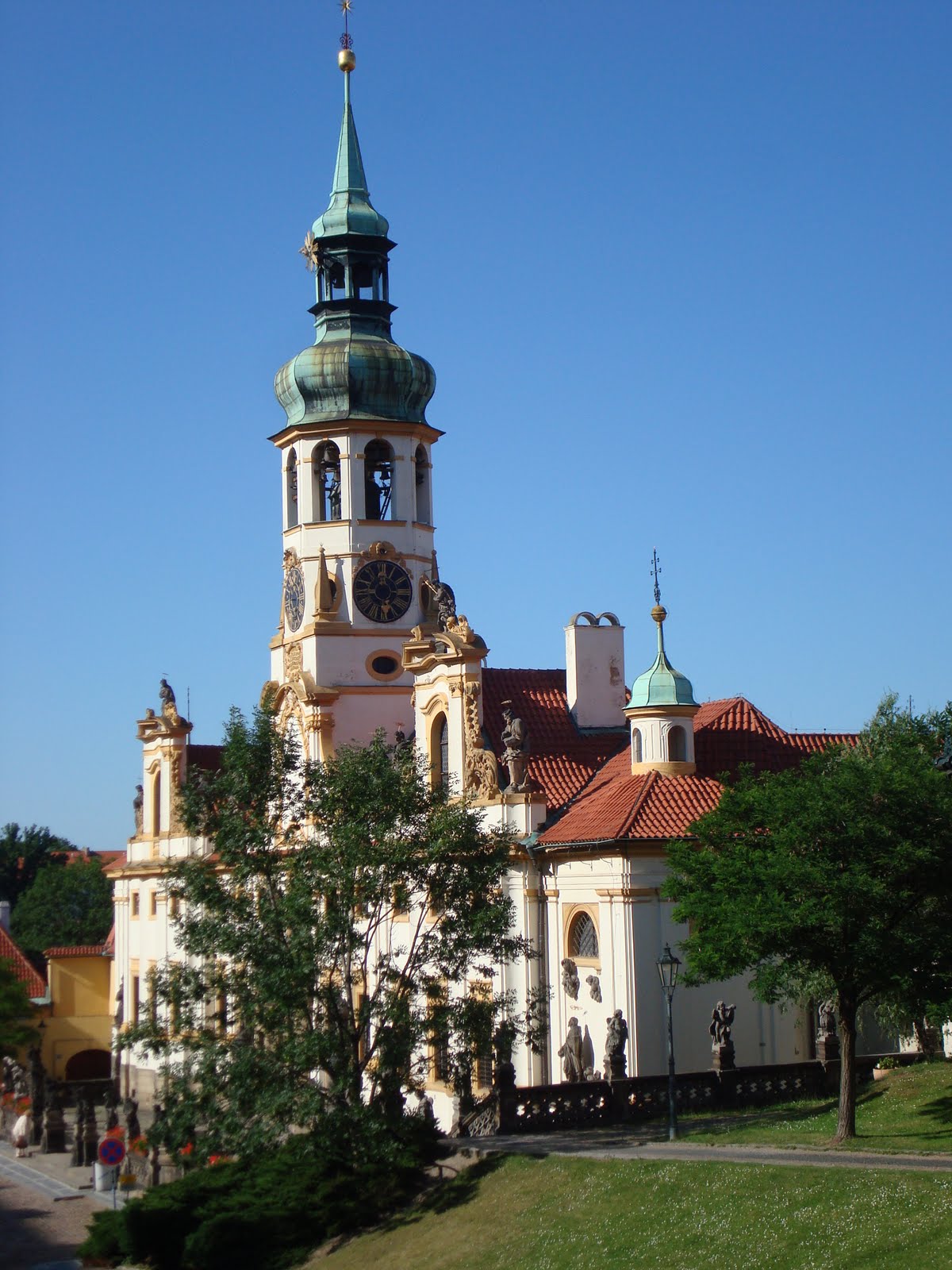
In the afternoon I joined the Castle District tour, which took us across the river to wind through the streets leading up to the castle overlooking the city. The castle dates back to the 9th century is apparently the largest castle in the world. In the center of the castle district stands St. Vitus Cathedral, which began construction in 926 but was only recently completed which is quite obvious due to the change in design techniques for the top portion of the Cathedral – check out a picture below. At the top of the castle district there is a monastery founded in 1140, which to this day brews beer to help finance the monastery. The best part of the whole tour was the moments when we were able to stop and enjoy the view of the city. Prague is a vast span of red roofs and tan buildings making it such a beautiful and picturesque city. I couldn’t stop taking pictures!


On my second day in the city I headed into the Jewish District, Josefov. The Jewish District, once the Jewish Ghetto during the years of WWII (for the Czech Republic this began in 1939), consists of six synagogues, a very crowded Jewish Cemetery and Jewish Museum. Faiz, a friend I made while on my train from Krakow, joined me for the day. The Jewish District exists still today only because the Nazi’s preserved this area in expectation of opening a museum there for the “extinct” Jewish race. Faiz and I went for two specific sites, the first being the Jewish Cemetery begun in the 15th century. Due to the crowding in the Jewish Ghetto, little room was available for the burial of Jewish individuals. For this reason, coffins were buried one on top of another in a system of layering with 10 being the most that was ever buried on top of one another. Visible are some 12,000 tombstones but below lays over 100,000 coffins. Due to this crowding, the tombstones have all begun to shift and fall into one another making it quite a site. There is a picture below. The second site we wanted to see was the Pinkas Synagogue. This synagogue houses the names, birthdates and dates of disappearance of all 77,297 Bohemian and Moravian Jews fallen victim to the Nazi terror. The walls are covered in these names and numbers from floor to ceiling. While we were in the prayer room, two Jewish men began to sing in prayer to the memorial plaque where inscribed are the names of the Concentration Camps these individuals were sent to and killed. As the men sang they began to cry, as did I. Though I set off on this whole trip to see the sites, I never imagined the historical lessons and events I would experience – the prayer was incredibly moving and I’m thankful we got a chance to see and be a part of remembering the names of these people who were so brutally killed. On the second floor of the synagogue is an exhibition of drawings and paintings done by children who were held in the Terezin Concentration Camp – their work showed the hope that one day they would be able to return to their happy lives in Prague. Unfortunately, the drawings are for the most part, all that remains of most of the children who were taken to Terezin.


On my last day in Prague, I did another Sandeman tour to a city outside Prague, called Kutna Hora. Once a competitor for the most prosperous city in the Czech Republic, Kutna Hora was the location of one of the richest silver mines in Central Europe. Our tour took us to see Saint Barbara’s Church, built to thank God for the wealth of the silver mine, as well as the location of the first minting press in the Czech Republic. Though these were interesting; the most famous site in Kutna Hora is a chapel known as The Sedlec Ossuary or Bone Chapel. Inside this Chapel rests the skeletons of some 20 – 40,000 individuals. The Chapel was constructed for burial ceremonies to take place in a once a very popular cemetery. As the chapel was being built on top of already buried bodies, the bodies were removed to be buried again later. However, one crazy monk who oversaw the chapel rearranged all the bones to be placed in their separate bone categories. When a new family took over the charge of the chapel, they ordered an artist to design something that would honor the bones now too disorganized to ever be sorted back to their proper individual’s coffin. Today, tourists can see 4 separate pyramids made of skulls and bones, a chandelier made of every bone in the human body and the crest of the family who commissioned the artwork also made entirely of human bone. It was quite creepy to see so many skulls hanging about the chapel and a tourmate commented on how hard it is to look at these skulls and not remember that they once were a part of a living, breathing human being like ourselves! The tour was really spectacular and in the afternoon we stopped at a cute outdoors restaurant to feast on traditional Czech food – I have attached a picture of the beef and dumpling dish with cranberries and cream, which I had along with a beer from the Kutna Hora region. The girls in my picture at the restaurant are from Minnesota – their names were Megan and Beth – too weird!


If you want to check out this fantastic company's website:

http://www.neweuropetours.eu/


City 1: Krakow, Poland

Dear Friends and Family,


Happy belated 4th of July! I hope that you are all having a wonderful summer and enjoyed a very nice Independence Day holiday! I am writing to you from Kharkiv, a large city in the east of Ukraine, which was once the Ukrainian capital during the time of the Soviet Union. I am here to prepare for the upcoming ABCamp while enjoying spending time with my clustermate, Whitney, who lives and works here in Kharkiv.


It has been a very very busy month and a half for me, of which I wrote about the first part in my Russia blog. Following my return to Ukraine I headed to L’viv to stay with my good friend, Kari, whom I visited for my birthday and from there I began my leap into Europe. My first stop was Krakow followed by Prague and ending in Budapest before heading back into Ukraine. I want to share with you some sites and pictures from these cities but due to all the pictures, I am splitting up the posts into their three perspective cities.


This 3-city tour began with plans to travel from Ukraine to Budapest with fellow NU alumna, Meaghan, and expanded to include a trip to Krakow and then simply made sense to connect the two cities with a stop in Prague. Krakow had only been a city on my list of places I would like to visit for about 2 months. In April, following the tragic plane crash which took the lives of the Polish President, his wife and many Polish government officials, I had a chance to watch some English language television and spent an entire afternoon watching the funeral of the Polish President and his wife. Though this was quite morbid, it ended up showing me the city of Krakow; including the insides of St. Mary’s Basilica, the Old Town Square, Wawel Castle overlooking the city and simply a lot of the beautiful architecture throughout Krakow. Through these images I determined I had to get to this beautiful ancient city and a short 2 months later I was there.


Krakow, which recently celebrated its 750th year, held the title of capital of the Polish state for over 500 years. The city is covered in Gothic and Renaissance architecture and has something beautiful to admire around every corner. I had to remind myself multiple times to look where I was going as I spent my entire 3 days in the city looking up and wandering around in awe of the unique facades of each building.


On my first full day in the city, I actually spent it touring two very famous sites outside of Krakow. The first in Polish is Oswiecim, but we know it as Auschwitz, the site of the largest attempt at genocide in human history. Auschwitz-Birkenau existed as a Nazi extermination camp from 1940-1945 and is the site where an estimated 1.6 million people died including 1.1 million Jews, 150,000 Poles and people of 27 nationalities in total. The morning of my tour was quite sunny and fairly warm which made fully feeling the effects of being in the Auschwitz camp quite difficult. Memories of black and white photographs of Auschwitz filled my mind, but walking through the barracks while the birds sang and the sun shined just made such a large number seem so unfathomable. Rooms filled with suitcases, shoes, eyeglasses, combs and brushes as well as women’s human hair; however, put the gruesome scene into better perspective. The Nazis had a plan for everything that was taken from the victims down to the hair being collected to make fabric for Nazi soldier clothing and blankets. Our tour included entrance into the barracks where prisoners slept 6-8 in a bunk bed as well as the prison barracks where prisoners were made to stand all night and were forced to work all the next day. One of the last stops at the Auschwitz camp was entrance into the first gas chamber, built to test the use of Zyklon B in the extermination of mass numbers of people. Originally prisoners were shot one at a time, but with the increase in number of prisoners entering the camps, the Auschwitz camp decided to test the chemical, originally used to get ride of lice on clothing, for use in the killing of prisoners. The chemical exists in small blue crystals and simply needs heat to turn into a deadly gas – the heat of enough bodies in a small enclosure suffices. As we entered the gas chamber, our tour guide pointed to the holes in the ceiling from which the crystals were dropped explaining that those near the hole died quickly, but those farther away had a few minutes before the gas would reach them. I cannot imagine the horror, which those people inside such gas chambers, must have felt before they passed away.


The Auschwitz complex actually consists of 3 camps, the second known as Birkenau and the third Monowitz. The Nazis successfully destroyed the Monowitz working camp, but failed to destroy all of Birkenau and most all of Auschwitz is left. Birkenau, however, was the site of the largest extermination with its 4 large gas chambers, each capable of asphyxiating up to 2,000 people at a time. We entered the camp and walked along the train tracks down to the remains of the 2 largest gas chambers and crematoriums (the Nazis blew these up before fleeing the site). As I walked along the tracks to the end which stands only a few feet from the entrance to the two large gas chambers, as far as I could see on both sides of me stood chimneystacks where over 300 barracks once stood. The camp held up to 200,000 prisoners and in the remaining weeks of the war, was used to kill 400,000 Hungarian Jews who were carted in by train and told to wait in line to be taken into the gas chambers. Photographs of individuals waiting with their families and personal possessions for their turn to go into the gas chamber, they were told it was into the shower, made my heart stop. As I looked at the pictures of these individuals, naïve to what was about to happen, I started to tear up. I wanted to yell out to them but what could I have done?


If you ever have a chance to see these camps, please do – only through education and understanding can we ensure that these catastrophes are not repeated.


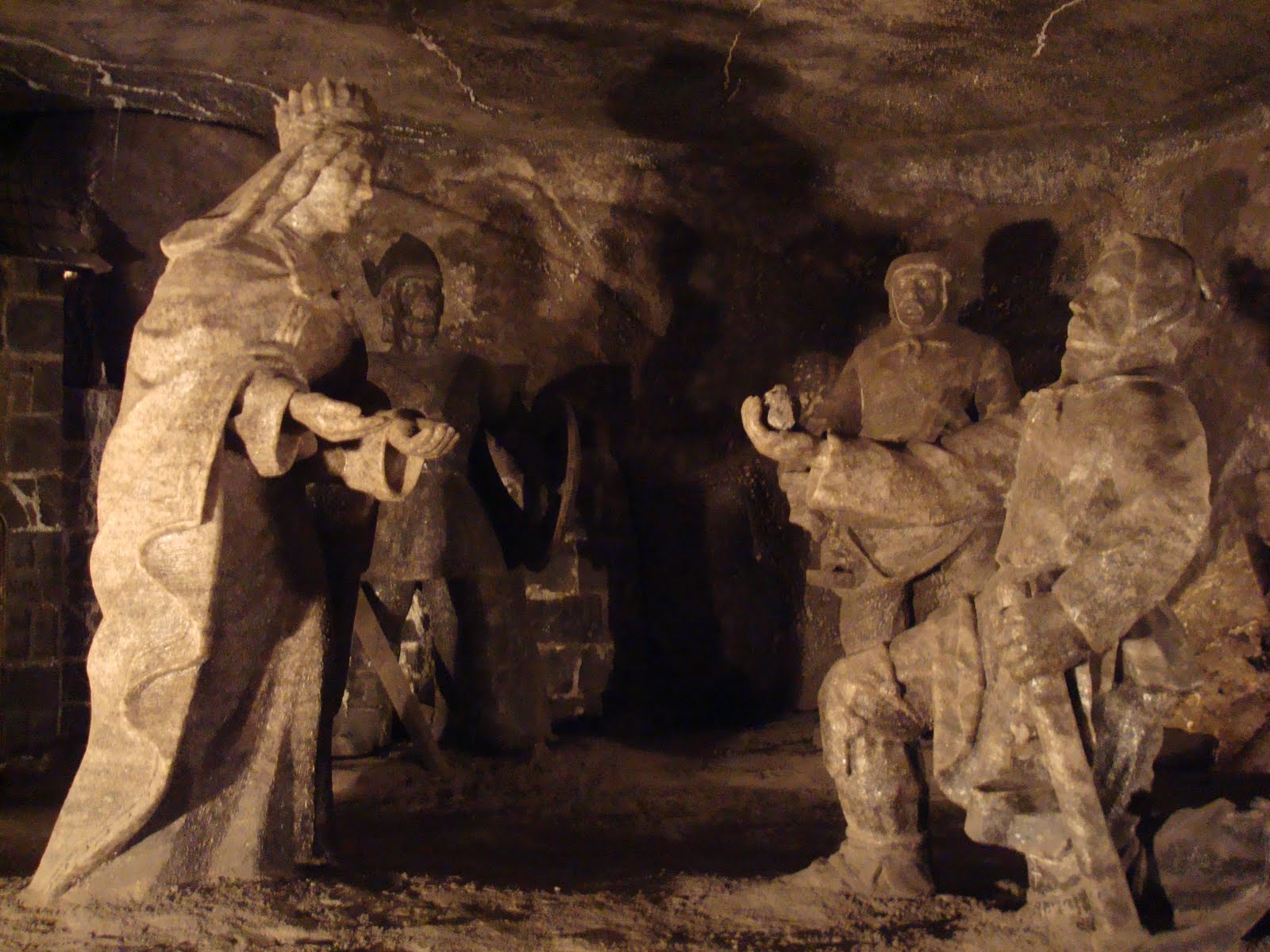
In the afternoon, I was able to travel another direction outside Krakow to visit the Wieliczka salt mine, a working mine for over 700 years. Salt used to be one of the most valuable resources in the world, more valuable than gold or silver. The word “salary” comes from the Latin word for salt and the hand gesture of rubbing your fingers together with your thumb to represent money – comes from the Roman hand gesture meaning “pay me in salt.” Interesting huh? The tour took us down 135 meters underground to visit some 22 different chambers where salt was mined. The mine actually comprises of 300 km of tunnels and gets to 327m deep. The salt mine is interesting to visit as miners, on breaks from excavating, spent time carving full sculptures from blocks of salt. Such salt sculptures included the likenesses of Nicholas Copernicus and Pope John Paul II as well as a replica of Davinci’s The Final Supper. One of the best parts is the Chapel of St. Kinga, a chapel entirely carved in salt from its “marble” tiled floors to the chandeliers and the chapel’s altarpiece. Every bit of it is carved from salt taken from a part of the mine. I felt a bit like I was in a room of Willy Wonka’s factory as the guide said everything here is edible – though I don’t know who would want to take a bite out of a wall of salt!


On my second day, I spent my time wandering Wawel Hill where from Kings ruled the Polish state before the capital was moved to Warsaw in the 16th century. Inside Wawel Cathedral rests the tombs of many of Poland’s most famous rulers and humanitarians including that of St. Queen Hedwig who ruled in the 14th century and who financed the construction of Collegium Maius, the second oldest University in Europe and the place where Copernicus first studied astronomy. The Polish President and his wife are also now buried in the crypt of the Cathedral. It was quite an emotional moment passing such a freshly completed tomb covered in roses while the many onlookers teared up and prayed over the marble covered tomb.


Also on Wawel Hill stands the Castle. I chose to visit the Royal Chambers, which are filled with 16th century intricately decorated tapestries on the walls, and then the Crown Treasury and Armory where on display rests the “Jagged Sword” used in all coronations from 1320 onwards. My favorite part of Wawel Hill, however, rests under the castle and cathedral. Legend has it that a fire breathing dragon once terrorized the people of Krakow until one day, a group of boys covered a bag of sulfur in animal furs and laid it outside the dragons cave for the dragon to eat. The legend differs in that some say the dragon died simply from the sulfur overdose while others say that the dragon became so thirsty from the sulfur that he drank so much water from the Vistula River that he exploded. Either way, the dragon no longer terrorizes the people of Krakow and tourists are able to walk through the damp crevices of his cave and exit to see a large bronze dragon, which breathes fire every few minutes. Check out the pictures below!


My last day in Krakow began with a tour of Collegium Maius, a college founded in the 14th century. Inside we were able to see 16th century astronomical instruments, which were used by Nicholas Copernicus when he was a student at the College, as well as the world’s tiniest globe dating to 1510, on which the American continent is placed about where we place Antarctica now on the map! Following my tour I went back to Old Town Square just in time for the sun to shine for the first time since my morning at Auschwitz. I used this opportunity to climb to the top of St. Mary’s Basilica also known as the Basilica of the Assumption of Our Lady. From the highest of the two towers, a trumpeter plays a tune every hour on the hour to remember the trumpeter who, when the Tatars were invading Krakow, sounded the alarm to protect the city but was killed mid note by a Tatar arrow. I remember reading the book “The Trumpeter of Krakow” in 7th grade at Shattuck – but only recalled this when I reached the top of the tower and had my picture taken with one of the trumpeters hired to play this famous tune. The views from the tower were incredible and I’ve attached pictures below. I also had a chance to go inside the Basilica and look up to the heavenly painted ceilings and golden altarpiece. As I sat near the altar and looked at the pews where the Ukrainian and Russian Presidents had been sitting during the funeral, I felt quite accomplished for having gotten myself here to enjoy this marvelous city.


Enjoy the pictures!